
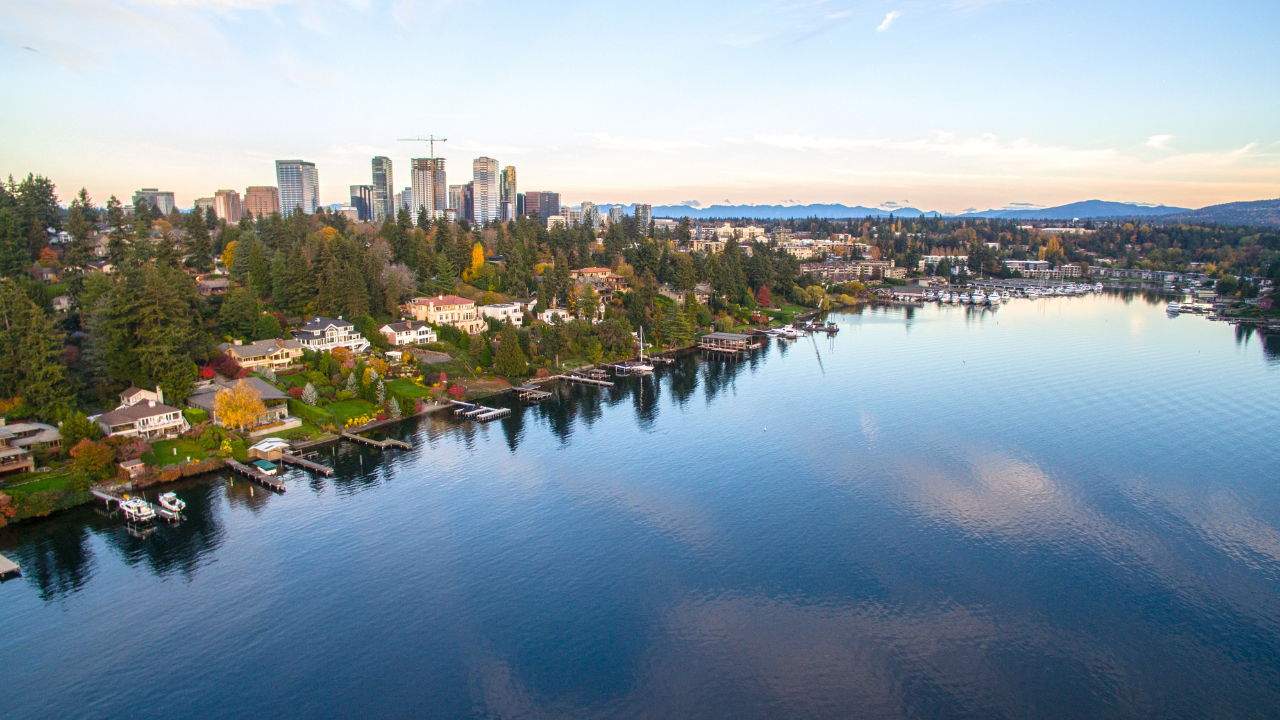
Bellevue sits across Lake Washington from Seattle and has grown from a quiet Eastside suburb into one of the Pacific Northwest’s most important business, technology, and cultural centers. Today, Bellevue combines a thriving urban core with established residential neighborhoods, waterfront communities, wooded streets, excellent parks, and easy access to the rest of the Seattle metropolitan area.
Think: Big-city amenities, top-rated schools, and a polished Eastside lifestyle — without giving up access to nature.
“With a strong economy, highly regarded schools, extensive parks and trails, and growing regional transit connections, Bellevue is one of the most desirable places to live on Seattle’s Eastside.”
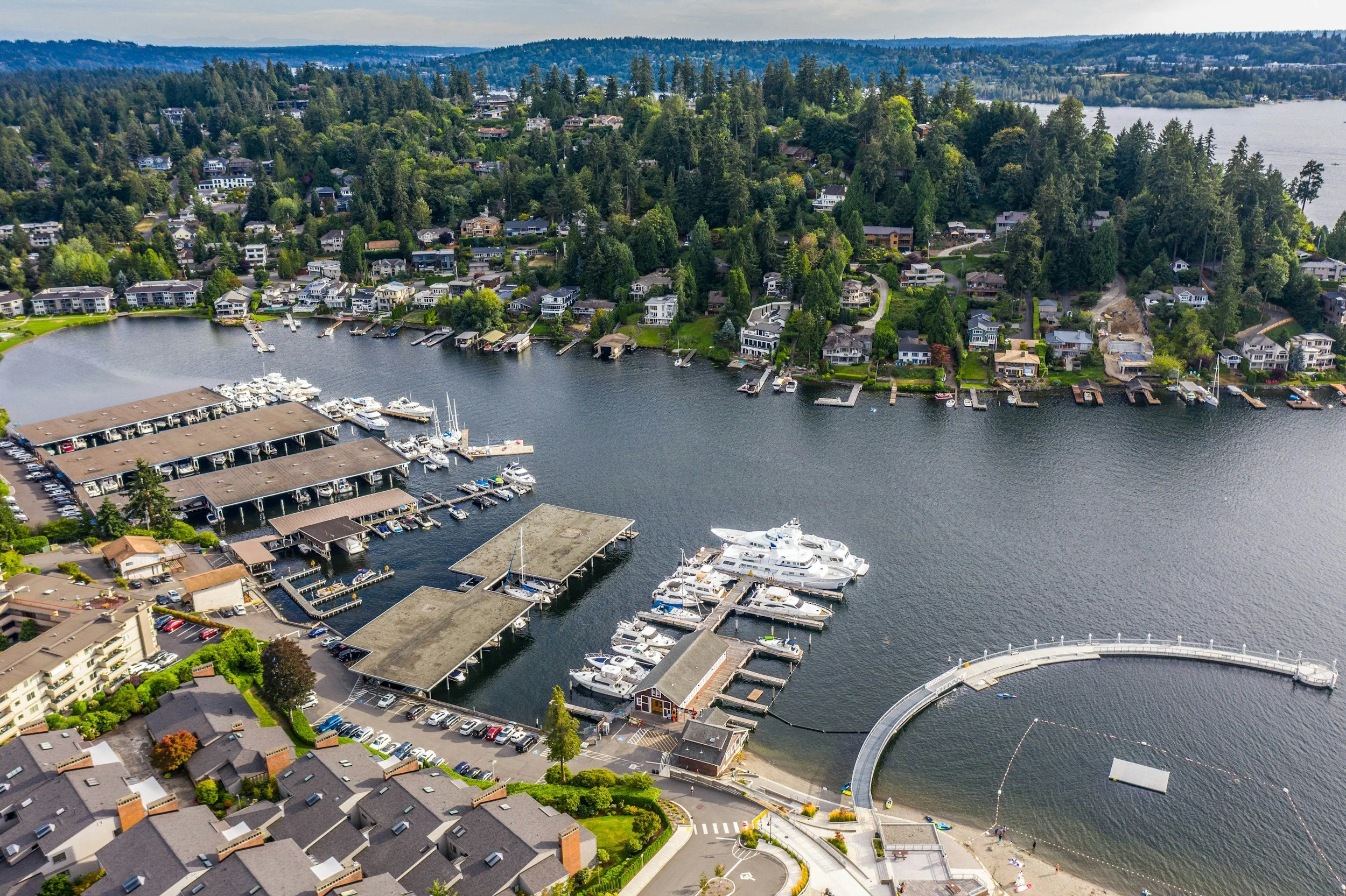
Meydenbauer Bay, Bellevue, Lake Washington
For people considering a move to the Eastside, Bellevue offers an unusual range of lifestyles in one city. You can live in a high-rise apartment steps from restaurants and shopping in Downtown Bellevue, settle into a quiet neighborhood surrounded by trees in Bridle Trails, enjoy waterfront living in West Bellevue, or find a more traditional suburban feel in areas such as Lake Hills and Newport.
Bellevue at a glance
Location: Eastside of Lake Washington, directly across from Seattle
Population: Approximately 158,000
Size: More than 33 square miles
Known for: Technology, employment, shopping, dining, schools, parks, and upscale residential communities
Major employment areas: Downtown Bellevue, BelRed, and Eastgate/Factoria
Outdoor highlights: Bellevue Downtown Park, Mercer Slough Nature Park, Meydenbauer Bay, Lake Washington, and extensive neighborhood parks and trails
Major highways: I-405, I-90, and SR 520
Transit: King County Metro and Sound Transit, including Link light rail
Nearby cities: Seattle, Kirkland, Redmond, Issaquah, Newcastle, and Mercer Island
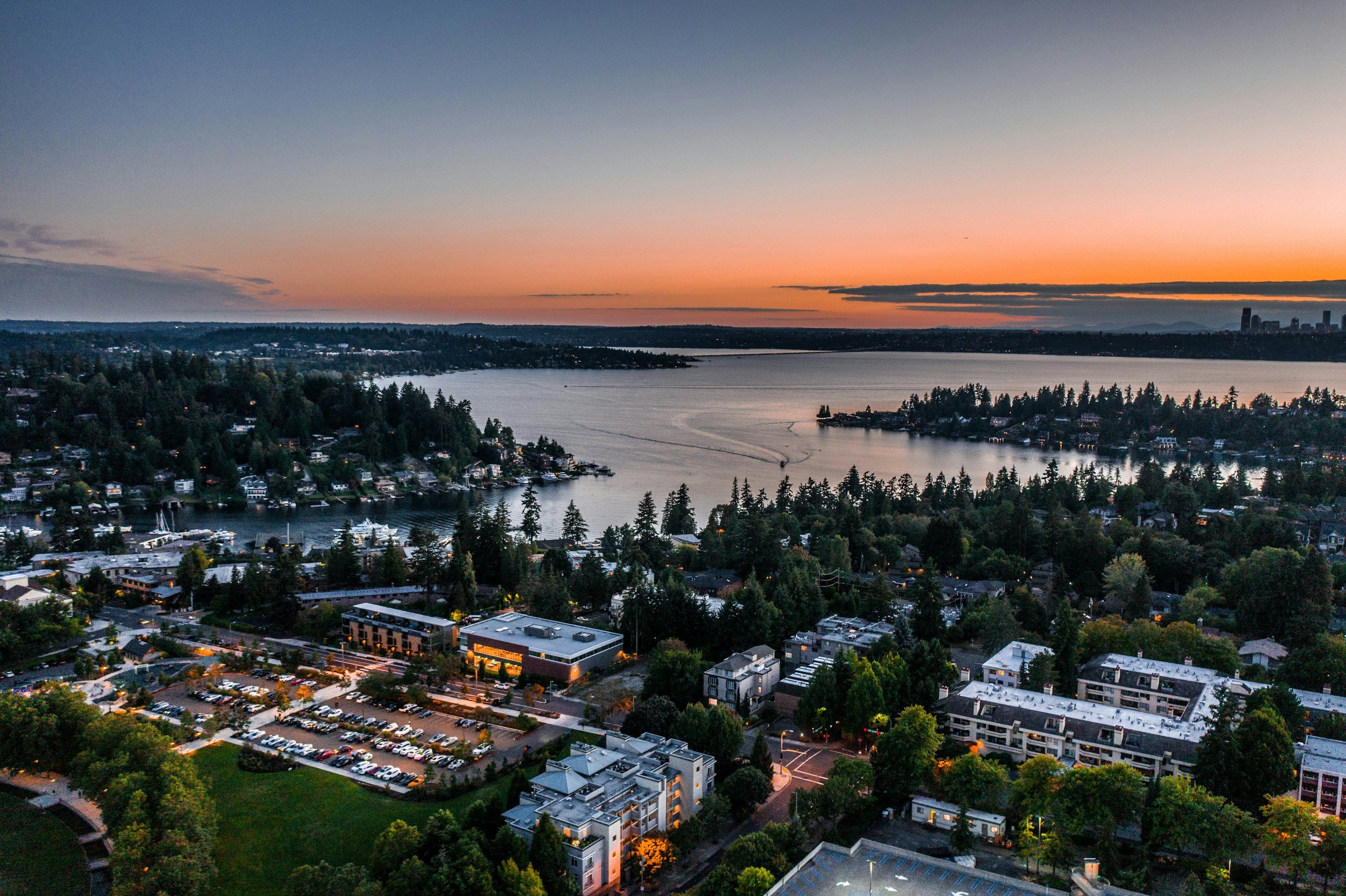
Sunset from Bellevue across Lake Washington with Downtown Seattle in the Background
🏙 Neighborhood Vibe
Bellevue feels more urban and polished than many of its Eastside neighbors, but its personality changes considerably depending on where you live.
Downtown Bellevue has a distinctly metropolitan atmosphere, with high-rise residences, offices, restaurants, shopping, entertainment, and Bellevue Downtown Park all within a relatively compact area. Outside the urban core, the city becomes increasingly residential, with quiet streets, mature trees, larger homes, parks, and neighborhood shopping centers.
The result is a city that can work for very different types of residents. Young professionals may gravitate toward Downtown or BelRed, families often look toward neighborhoods such as Somerset, Newport, Lake Hills, and Bridle Trails, while buyers seeking more privacy, larger lots, or waterfront access may prefer West Bellevue, Northwest Bellevue, or the areas surrounding Lake Sammamish.
Bellevue is also remarkably diverse. The city has become one of Washington’s major international and technology hubs, and its restaurants, businesses, schools, and neighborhoods reflect that diversity.
🧭 Location & History
Bellevue occupies a strategic position between Lake Washington and Lake Sammamish, roughly 10 miles east of downtown Seattle. I-405 runs north-south through the city, while I-90 provides a direct connection to Seattle, Mercer Island, and the Cascade foothills. SR 520 connects Bellevue with Seattle and the University District.
Long before modern Bellevue developed, Coast Salish peoples including the Duwamish and Snoqualmie lived, hunted, and fished throughout the region. The area that became Bellevue was heavily wooded, with wetlands and natural waterways between Lake Washington and Lake Sammamish.
European-American settlement began in the 1800s, and Bellevue gradually developed from a rural community into an agricultural and residential suburb. Its transformation accelerated dramatically during the second half of the 20th century as the Seattle metropolitan area expanded eastward.
Today, Bellevue is Washington's fifth-largest city and one of the principal economic centers of the Puget Sound region. The city is home to approximately 158,000 residents and around 160,000 jobs, with a major concentration of technology, healthcare, finance, retail, and professional services.
Downtown Bellevue has evolved into a genuine urban center, while areas such as BelRed and Wilburton continue to undergo significant redevelopment. At the same time, much of Bellevue retains the tree-lined residential character that originally attracted people to the Eastside.
Bellevue Areas & Neighborhoods
One of the most important things to understand about Bellevue real estate is that Bellevue is not one single type of community. The city contains a wide variety of neighborhoods, each with its own housing, atmosphere, amenities, and price points.
Downtown Bellevue
The city's urban center offers high-rise condominiums and apartments, restaurants, shopping, entertainment, offices, and easy access to Bellevue Downtown Park. Downtown is the best fit for people who prioritize walkability and being close to everything.
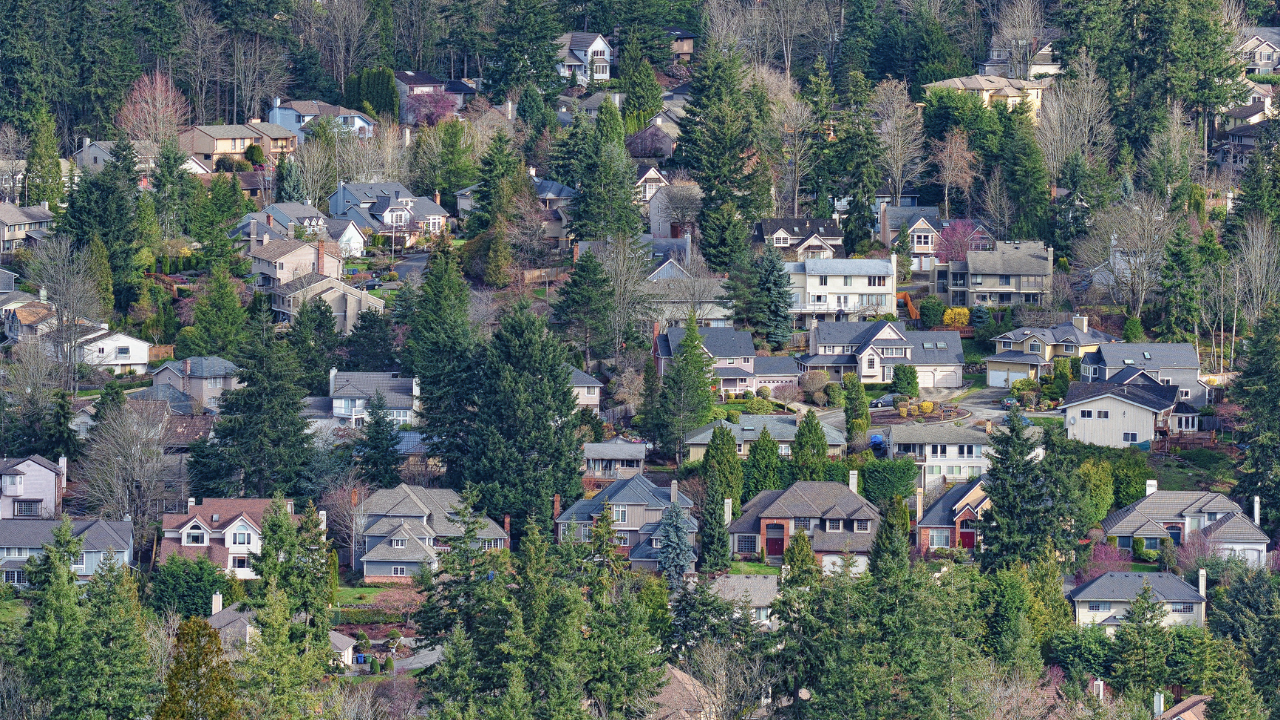
Bellevue Neighborhood
West Bellevue
West Bellevue includes some of the city's most established and prestigious residential neighborhoods, including Enatai and Meydenbauer. Many homes sit among mature trees near Lake Washington, with waterfront access and views available in select areas.
Northwest Bellevue
Immediately north of Downtown, Northwest Bellevue combines established residential neighborhoods with larger homes, mature landscaping, and easy access to Downtown, SR 520, and I-405. Meydenbauer Bay is one of the area's major recreational attractions.
Bridle Trails
Bridle Trails has a distinctly different character from Downtown Bellevue. Heavily wooded streets, larger residential lots, equestrian properties, and access to Bridle Trails State Park give the area a quieter, semi-rural atmosphere despite its central location.
Crossroads
Crossroads is one of Bellevue's most diverse and community-oriented areas. It combines established single-family neighborhoods with apartments, shopping, restaurants, cultural activities, and community services. Crossroads Shopping Center serves as an important local gathering place.
Lake Hills
Lake Hills has a more traditional suburban feel, with established single-family neighborhoods, shopping centers, parks, trails, wetlands, and access to Bellevue College. It is one of Bellevue's largest residential areas.
Eastgate & Factoria
Located around I-90 and I-405, Eastgate and Factoria offer convenient freeway access along with a mixture of homes, apartments, offices, shopping, and restaurants. The area is particularly attractive to commuters who want access to both Bellevue and Seattle.
Newport
Newport encompasses several distinct communities, including Newport Hills, Newport Shores, Lake Heights, and Greenwich Crest. Some areas offer waterfront living and lake access, while others have a more traditional suburban neighborhood feel.
BelRed
BelRed is one of Bellevue's most rapidly changing areas. Formerly dominated by light industrial uses, it is being transformed into a mixed-use, transit-oriented district with new housing, offices, businesses, parks, and arts and cultural spaces.
Cougar Mountain & Lakemont
Located in southeastern Bellevue, Cougar Mountain and Lakemont offer a more secluded residential environment with wooded surroundings, larger homes, trails, and elevation changes. The area is particularly appealing to buyers looking for privacy and access to nature while remaining within Bellevue.
🍃 Things to Do in bellevue
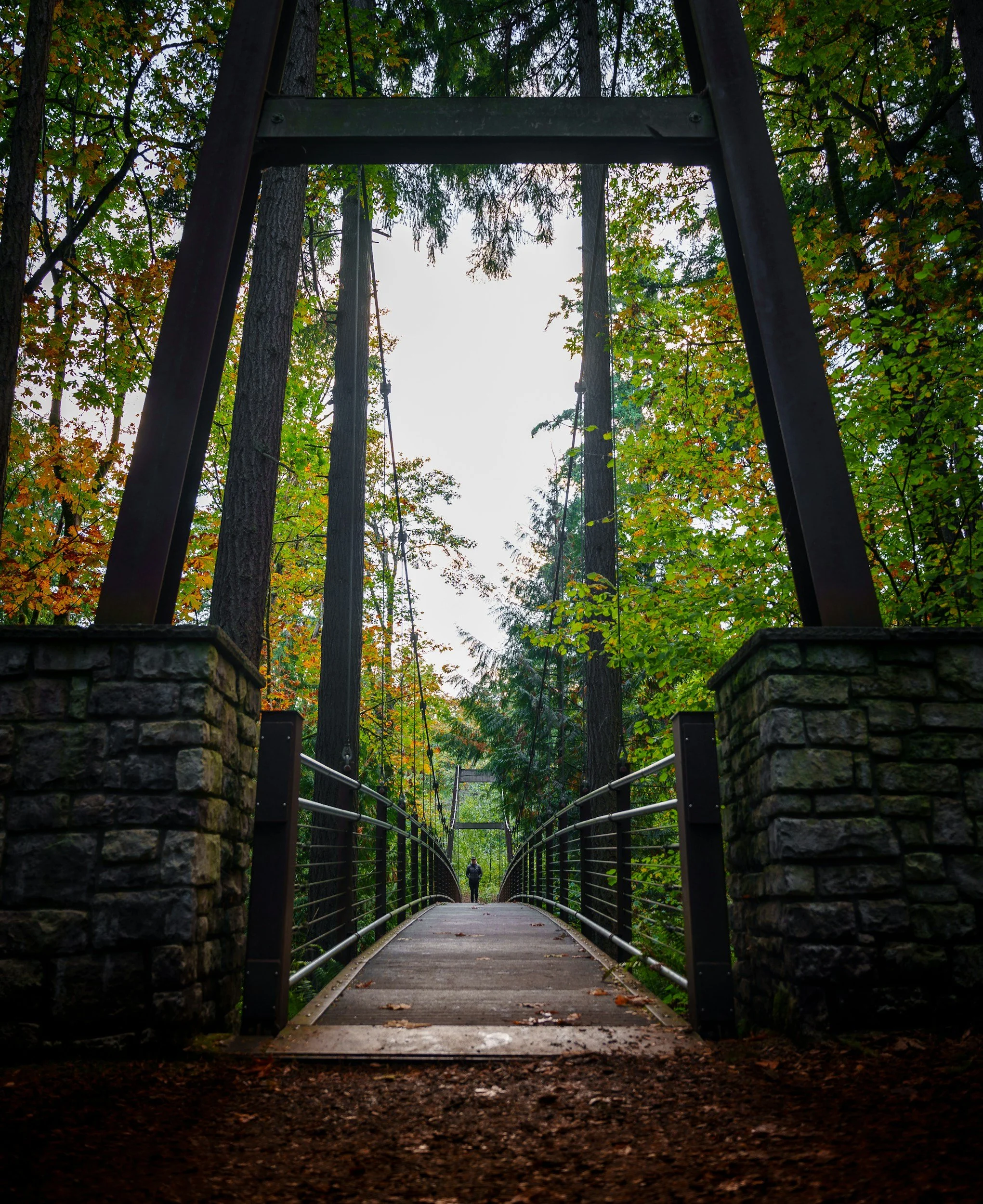
Explore Downtown Bellevue
Downtown is the city's main destination for shopping, dining, entertainment, and urban living. The Bellevue Collection, The Bravern, Old Bellevue, and surrounding streets offer everything from major retailers to independent restaurants and cafes.Spend an afternoon at Bellevue Downtown Park
This 21-acre park sits directly in the heart of Downtown Bellevue and provides a surprising amount of green space in the middle of the city's urban core. Its large lawn, promenade, waterfall, playground, and gardens make it one of Bellevue's signature gathering places.Visit Bellevue Botanical Garden
The Bellevue Botanical Garden showcases Northwest plants and landscapes across a collection of gardens and natural areas. It is one of the city's best places to enjoy the outdoors without leaving the urban area.Explore Mercer Slough Nature Park
Just minutes from Downtown, Mercer Slough is a 320-acre wetland preserve where visitors can walk trails, explore the waterways, and experience a very different side of Bellevue. Kayaking is also available in the area.Enjoy Lake Washington
Bellevue's western edge provides access to Lake Washington through locations including Meydenbauer Bay, Enatai Beach Park, Chism Beach, and other waterfront areas.Visit Crossroads
For a taste of Bellevue's multicultural side, Crossroads offers restaurants, shops, community events, entertainment, and a lively neighborhood atmosphere.Explore Bridle Trails State Park
The 482-acre Bridle Trails State Park provides miles of trails through a heavily wooded landscape and is especially known for its equestrian character.Visit Kelsey Creek Farm
Kelsey Creek Farm Park offers a glimpse into Bellevue's agricultural past, with historic farm buildings, gardens, animals, trails, and family-oriented activities.Take advantage of Bellevue's parks and trails
Bellevue has nearly 100 parks and an extensive network of trails, greenbelts, wetlands, and open spaces. Nature is never particularly far away, even in the middle of the city's busiest districts.
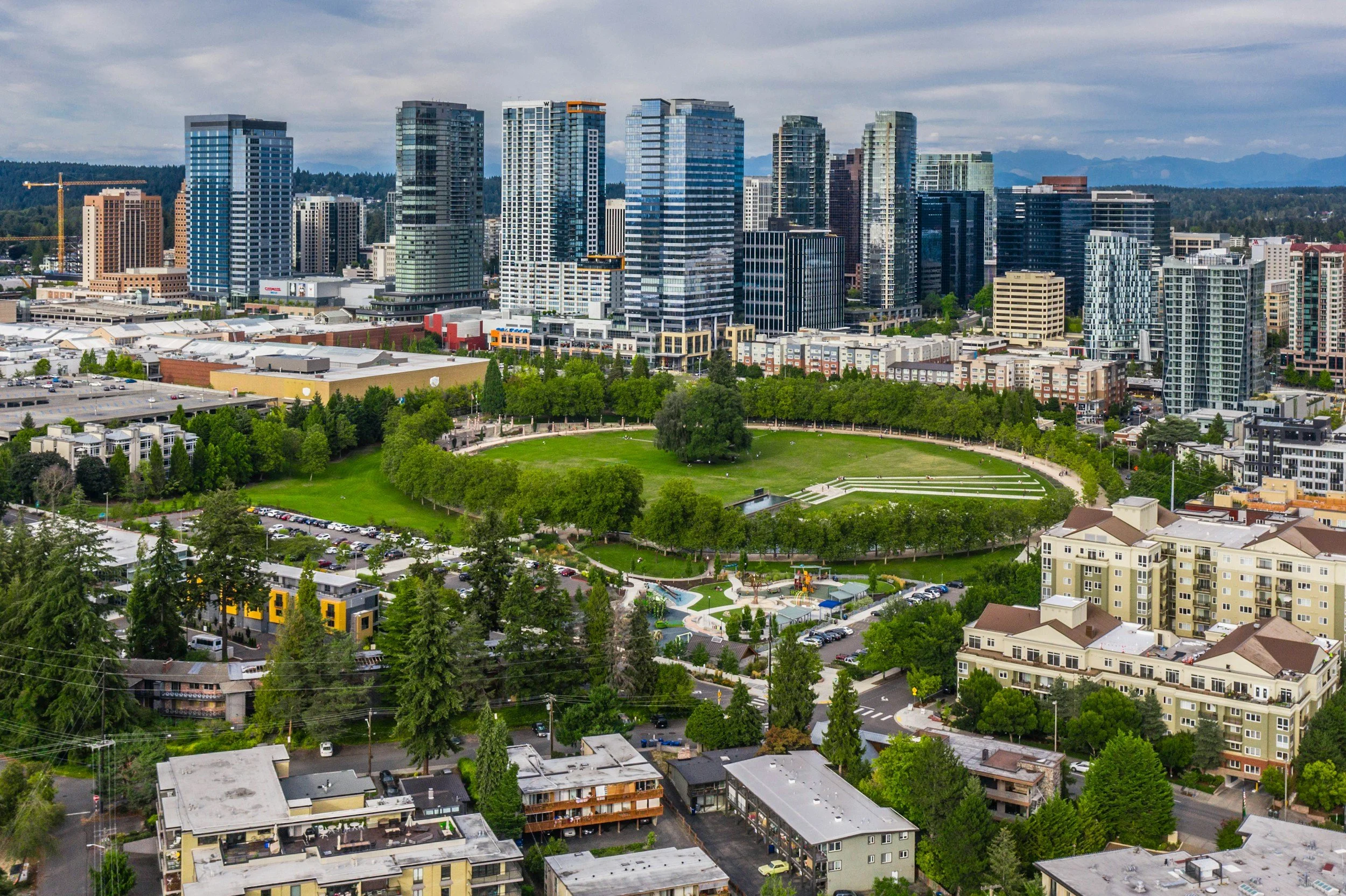
Downtown Park, Bellevue, wa
🚗 Commute & Walkability
Bellevue is exceptionally well positioned for getting around the Eastside and the wider Seattle region.
I-405 runs through the city and connects Bellevue with Kirkland, Bothell, Renton, and other Eastside communities. I-90 provides a direct route to Seattle and the Cascade foothills, while SR 520 connects Bellevue with Seattle and areas north of Lake Washington.
Public transportation has also become increasingly important to Bellevue's growth. King County Metro provides extensive bus service, while Sound Transit's Link light rail connects Bellevue with destinations across the region.
For residents living in Downtown Bellevue, walkability is one of the city's strongest advantages. Restaurants, shopping, parks, offices, entertainment, and residential buildings are concentrated within a relatively compact area.
Outside Downtown, Bellevue becomes much more car-oriented. Some neighborhoods have excellent access to local parks, schools, and shopping, but the ability to walk everywhere depends heavily on the specific neighborhood.
The city's ongoing investment in pedestrian, bicycle, transit, and road infrastructure is also reshaping how residents move around Bellevue as the population and employment base continue to grow.
🏡 Real Estate Snapshot
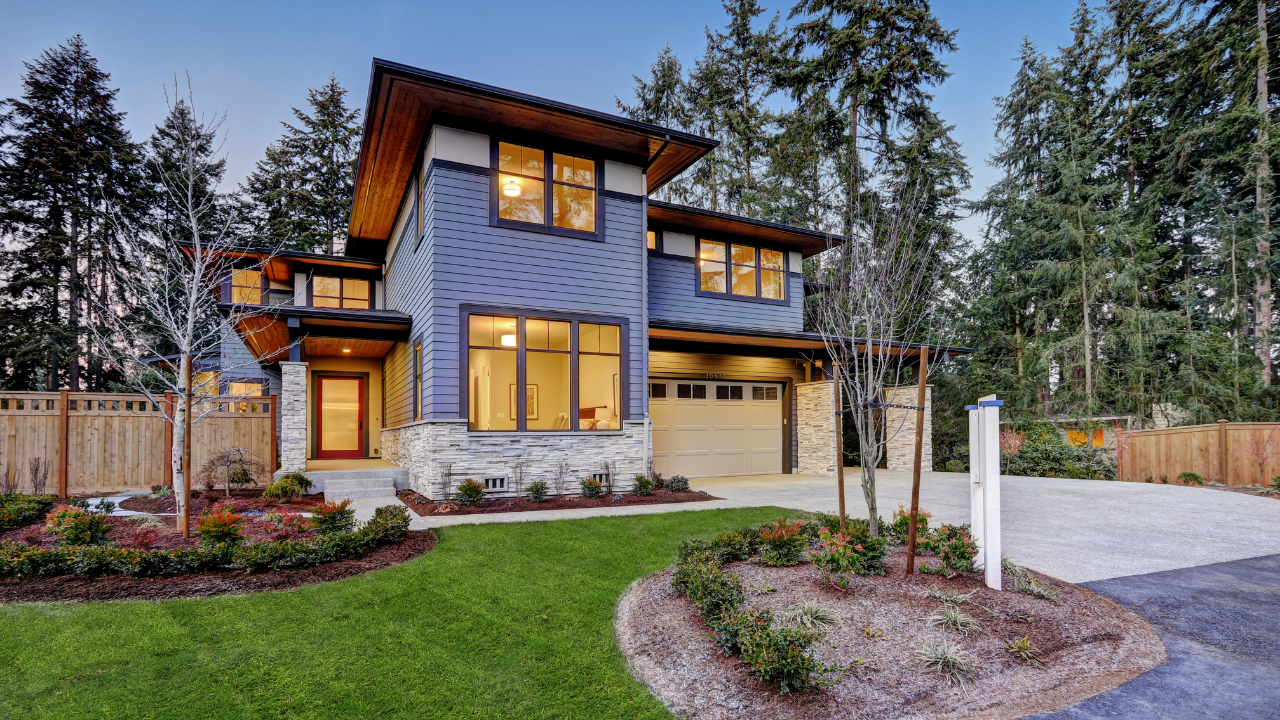
Luxurious home construction in Bellevue
Bellevue is one of the most expensive real estate markets on Seattle's Eastside, but prices vary considerably from one neighborhood to another.
Housing ranges from downtown condominiums and apartments to established mid-century neighborhoods, newer construction, luxury homes, large wooded properties, and waterfront estates. That diversity means there is no single "Bellevue home" — the type of property and lifestyle you can find depends heavily on the area.
As of mid-2026, Zillow reported a typical Bellevue home value of approximately $1.47 million, while its median sale price was approximately $1.38 million based on May 2026 data. Redfin reported a median sale price of approximately $1.50 million over the three months ending May 2026.
The market also varies significantly within Bellevue. More modestly priced homes can be found in areas such as Lake Hills and Crossroads, while neighborhoods including West Bellevue, Northwest Bellevue, Somerset, and waterfront communities can command substantially higher prices.
For buyers, this makes neighborhood selection particularly important. Two homes with similar sizes can have very different prices depending on their location, school assignment, lot size, views, proximity to Downtown, and access to waterfront or other amenities.
For sellers, Bellevue's strong employment base and continued demand for housing help support long-term interest in the market, although individual neighborhoods and property types can perform very differently.
🎯 Is Bellevue Right for You?
✅ You’ll love Bellevue if:
You want access to a strong job market without living in Seattle proper
Excellent schools are a major priority
You like having shopping, restaurants, parks, and services close by
You want a wide choice of housing and neighborhood styles
You appreciate a combination of urban amenities and easy access to nature
You commute around the Eastside or to Seattle
You want a community with strong long-term investment and development
You're comfortable paying a premium for location and amenities
❌ Bellevue may not be for you if:
You're looking for a lower-cost Seattle-area community
You prefer a smaller-town or rural atmosphere
You want a highly walkable lifestyle but don't want to live near Downtown
You dislike traffic and busy commercial areas
You want a large property at a price more typical of communities farther from Seattle
You prefer a neighborhood with a more distinctly historic or quirky identity
Thinking About Living in Bellevue?
Bellevue offers one of the broadest lifestyle choices on Seattle's Eastside. You can have a true urban experience Downtown, a quiet suburban neighborhood in Lake Hills or Newport, a wooded retreat in Bridle Trails or Cougar Mountain, or a luxury waterfront lifestyle along Lake Washington.
The key is finding the right part of Bellevue for the way you actually want to live.
📞Thinking about buying or selling in Bellevue? Let's chat →
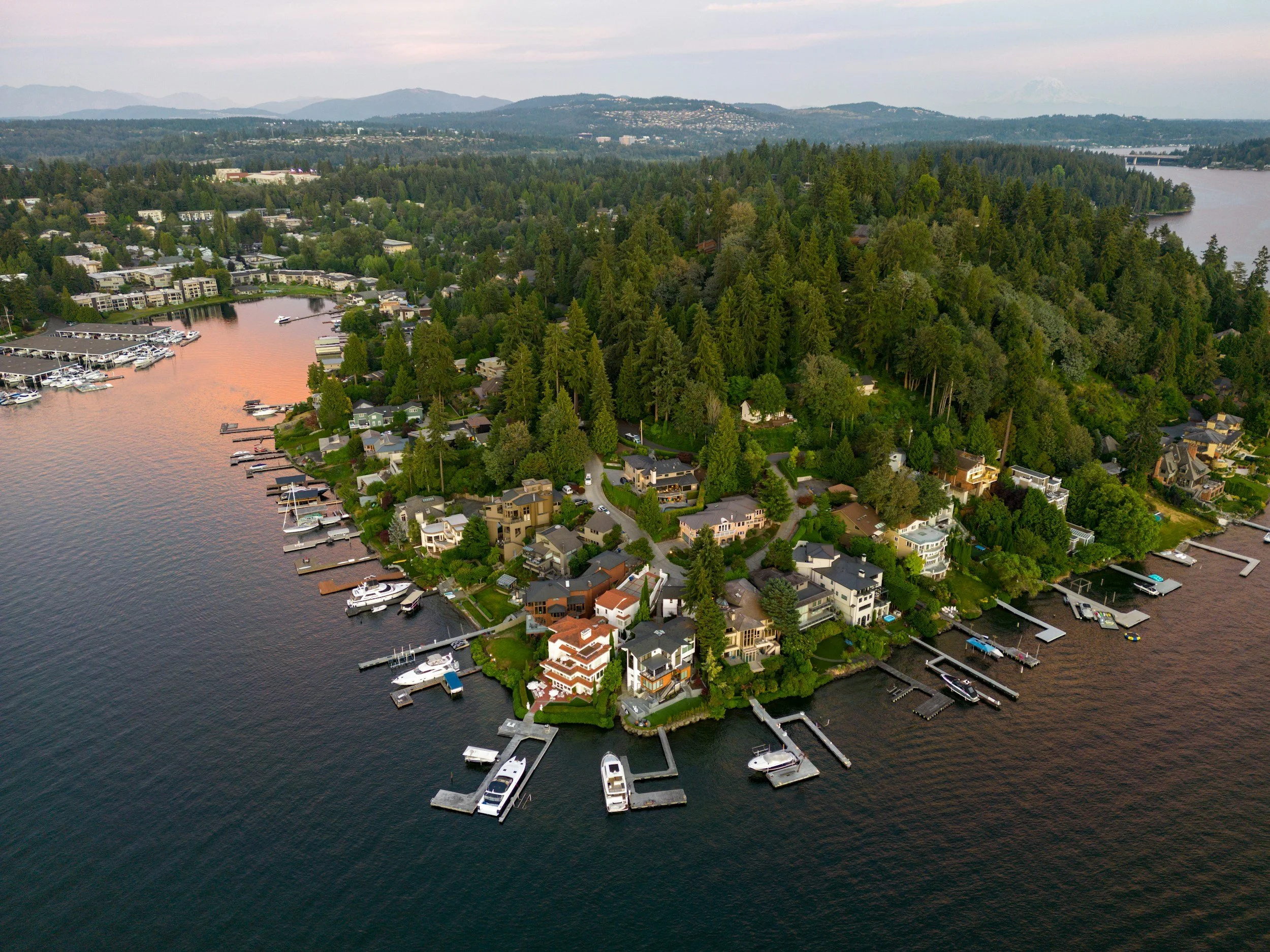
Your Guide to the Best Cities East of Lake Washington
Written by Christian Harris —
Eastside Seattle real estate specialist,
Sea-Town Team | Powered by REAL Broker
Last updated: June 2026