
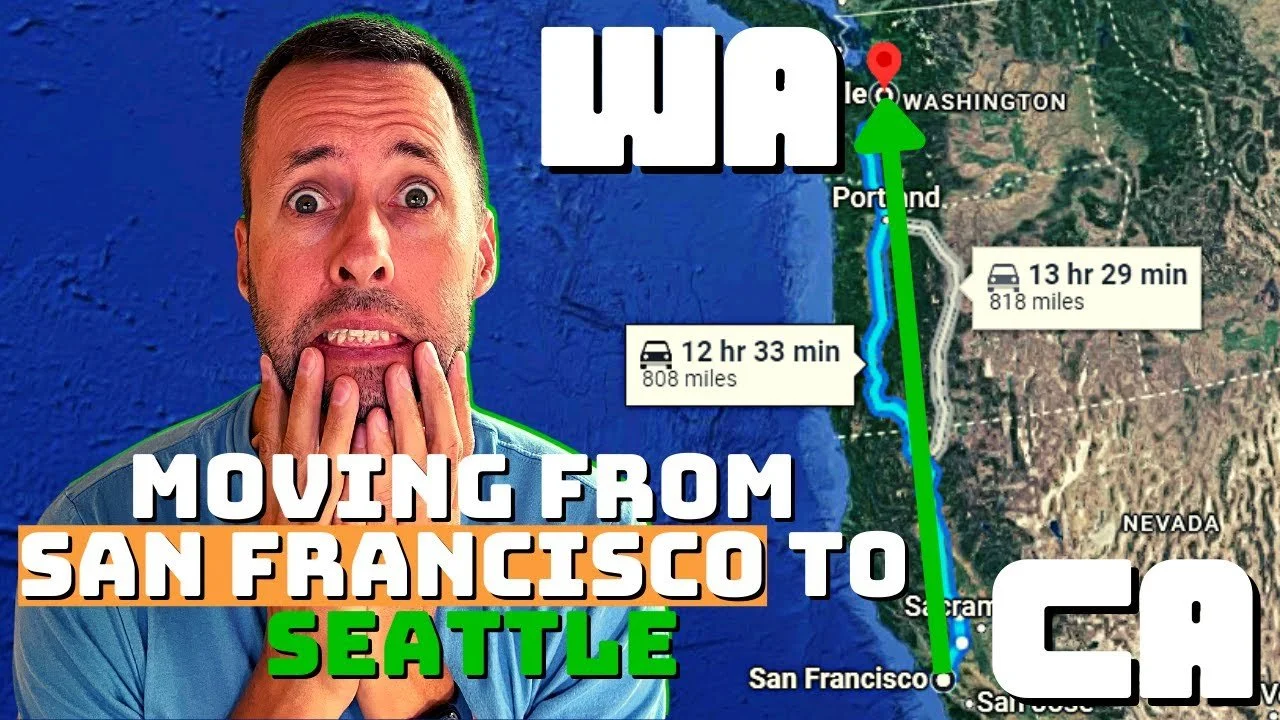
If you're moving from San Francisco to Seattle, congratulations: you're about to keep most of what you love about the Bay Area and ditch a chunk of what's been quietly bleeding your bank account. Same tech gravity, same water-and-mountains views, a lot more room to breathe.
I'm Christian Harris, a managing broker who's lived in the Seattle area for 30+ years and spent the last decade helping people relocate here, a ton of them coming straight up the I-5 corridor from SF. The San Francisco to Seattle move is one of the smoothest relocations I see, but only if you go in knowing how the two cities actually differ. Let's get into it.
Is Seattle cheaper than San Francisco?
Yes. For most people moving from San Francisco to Seattle, the cost of living is a noticeable step down, and housing is the biggest reason.
Your housing dollar simply stretches further here. The home that felt impossible in SF or the Peninsula starts to look reachable in Seattle, and if you're open to the Eastside or the suburbs, more so. I won't throw made-up percentages at you, but I'll say this: most of my Bay Area transplants are genuinely surprised by what they can afford here, especially when they realize they can get a yard and a garage instead of a third-floor walkup.
The catch is that "cheaper than San Francisco" is a low bar. Seattle is still an expensive coastal tech city, not a Midwest bargain. Plan accordingly and you'll be thrilled. Assume it's cheap across the board and you'll get a surprise at the grocery store.
Does Washington have a state income tax like California?
No. Washington has no state income tax, and that's one of the biggest financial differences between the two states.
California's state income tax is among the highest in the country, and it climbs fast at tech-salary levels. Move to Washington and that line item disappears from your paycheck entirely. For a lot of the engineers, PMs, and finance folks I work with, that difference alone reframes the whole budget conversation, because suddenly more of your offer letter actually lands in your account.
Now, the honest footnote: Washington makes up some of that revenue elsewhere, with a higher sales tax and other costs. It's not a free lunch. But for high earners coming from California, the no-income-tax math usually works strongly in your favor.
Is the tech scene in Seattle as good as San Francisco?
Yes. Seattle is a top-tier tech hub in its own right, anchored by Amazon and Microsoft with deep benches at Google, Meta, and hundreds of startups.
This is the part Bay Area people are quietly relieved about. You're not trading down on career opportunity. Amazon and Microsoft are headquartered here, and just about every major tech company you can name has a serious Seattle or Bellevue engineering office. The talent density, the meetups, the venture money, it's all here. Seattle isn't "San Francisco lite." It's its own heavyweight that happens to be more livable.
The vibe is a little different. Seattle tech tends to feel a touch less frenetic, a little more outdoorsy, slightly less obsessed with the next funding round. Whether that's a pro or a con is up to you, but the opportunity is absolutely there.
What's different about space and nature in Seattle?
Seattle gives you dramatically more space and easier access to nature than San Francisco, with less of the wall-to-wall density.
In SF, every square foot is a negotiation. In Seattle, neighborhoods open up. You get actual single-family homes inside the city, real yards, tree-lined streets, and you're never far from the water or the mountains. The Cascades are to your east, the Olympics to your west, Puget Sound right in the middle, and you can be hiking, skiing, kayaking, or in the San Juans within a couple hours.
For people who felt boxed in by the Bay Area, this is the part of the move that sells itself. More house, more green, more weekend adventure, and a lot less feeling like you're stacked on top of your neighbors.
What about the weather, traffic, and density?
The trade-offs moving from San Francisco to Seattle are grayer winters and a more spread-out city, in exchange for far less density and more breathing room.
Let's be straight about the gray. Seattle winters are cloudy and damp from roughly November through spring. It's rarely freezing and it's rarely a hard downpour, more of a persistent soft drizzle, but the lack of sun is real and some people need a light therapy lamp and a vitamin D habit to thrive. The flip side: Seattle summers are jaw-droppingly gorgeous, with long sunny days and zero humidity. They are the reward.
Traffic exists, but the city feels less crushingly dense than SF. You'll trade some of that walk-everywhere SF urbanism for a more spread-out metro where, depending on your neighborhood, you may lean on a car a bit more. Pick your location around your real commute and you sidestep most of the pain.
How do I pick the right Seattle neighborhood coming from SF?
Map it to the SF life you actually want to keep. If you loved walkable, urban SF, look at Capitol Hill, Ballard, or Queen Anne. If you're optimizing for a tech commute and space, look Eastside.
Here's how I coach Bay Area clients. If your favorite thing about SF was walking out your door into cafes and nightlife, Seattle's denser city neighborhoods will feel like home. If you were already dreaming about a yard and a shorter commute to a Bellevue or Redmond office, the Eastside delivers. And if you want the best price-to-space ratio inside the city, West Seattle keeps showing up on my buyers' lists.
The mistake I see is picking a neighborhood off a "best of" list from 800 miles away instead of off your actual daily routine. Don't do that. Map your real commute at rush hour, decide your non-negotiables, and talk to someone who lives here.
Ready to make the move from San Francisco to Seattle?
If you're relocating from the Bay Area, let's make sure you land in the right neighborhood the first time and time the move right.
Book a free relocation call (phone or Zoom): https://calendly.com/sea-town/15min-call
Selling your place in California? I'll connect you with a personally vetted agent to handle that sale → https://sea-town.com/find-an-agent
Start your home search: browse current Seattle listings → https://christianharris.realscout.me
Grab the free Buyer's Guide: https://sea-town.com/seattlebuyersguide
Bring light, laughter, and a smart plan to your move. That's the whole goal.
Christian Harris is a Managing Broker and team leader with Sea-Town Team, powered by REAL, in Seattle, WA.
Frequently Asked Questions
Is Seattle cheaper than San Francisco?
Yes. For most people moving from San Francisco to Seattle, the cost of living is noticeably lower, with housing being the biggest difference. Your housing dollar stretches further in Seattle, especially on the Eastside or in the suburbs. That said, Seattle is still an expensive coastal tech city, so it is cheaper than San Francisco but not a bargain market.
Does Washington have a state income tax like California?
No. Washington has no state income tax, while California has one of the highest in the country. For high earners moving from San Francisco to Seattle, eliminating California state income tax can significantly improve their budget, though Washington has a higher sales tax to partially offset it.
Is the tech scene in Seattle as good as San Francisco?
Yes. Seattle is a top-tier tech hub anchored by Amazon and Microsoft, with major offices for Google, Meta, and hundreds of startups. You are not trading down on career opportunity by moving from San Francisco to Seattle. The scene tends to feel slightly less frenetic and more outdoors-oriented than the Bay Area.
What are the downsides of moving from San Francisco to Seattle?
The main trade-offs are grayer, cloudier winters from roughly November through spring and a more spread-out city that can mean more driving depending on your neighborhood. In exchange you get far more space, easier access to nature, less density, and stunning summers. Choosing your neighborhood around your real commute solves most of the friction.